The Iran War Shows Why Polymarket Should Be Illegal

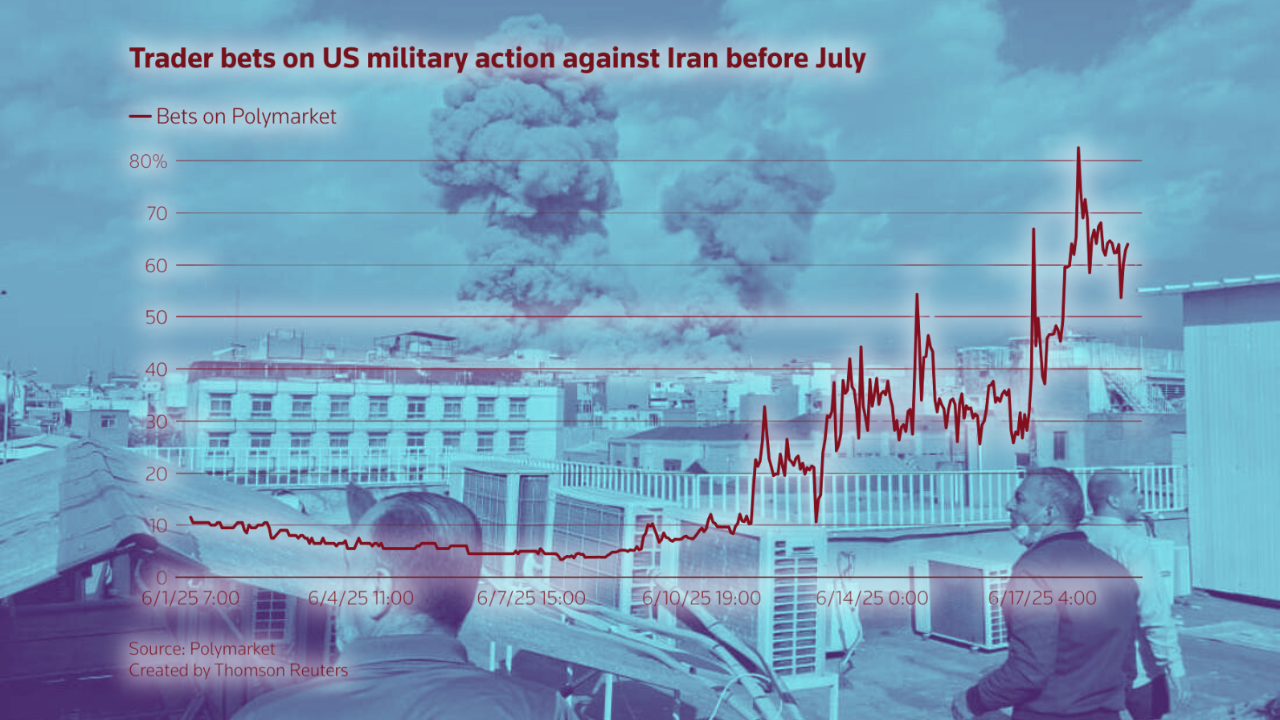
Betting markets treat the flow of world events as random, but there are people making real decisions and there's nothing stopping them from profiting from those decisions
This weekend, an unnamed person with the user name "Magamyman" began placing bets that the US and Israel would soon begin strikes on Iran on the news betting site Polymarket. Seventy one minutes later, bombs began to drop. We have no idea who that person is, but they ended up placing 7 bets that paid out a lump sum in excess of $500,000.
It appears that a Polymarket account called "Magamyman" made $515,000 in a single day betting on last night's U.S. strike on Iran, with the first trade placed 71 minutes before the news broke publicly.
— Mike Levin (@mikelevin.org) 2026-03-01T04:55:33.289Z
Putting aside for a moment the grotesque prospect of betting on whether countries will go to war and the thousands that would end up dying in these scenarios, the chronic insider trading in these "news" betting markets should encourage us to ban them while they are still new enough to do so.
Executives at these betting sites claim that their services are closer to a stock market than a casino. Kalshi founder CEO Tarek Mansour has said the company wants to “financialize everything and create a tradable asset out of any difference in opinion.”
The websites work by offering bettors "contracts" for different news scenarios, such as election results, or in this week's case, wars with foreign nations. Let's be clear here, these are prop bets, more akin to betting on who wins the coin flip at the Super Bowl than the any financial market.
The stock market is very strictly regulated and insider trading is rightly banned. Those with insider knowledge have an inherent advantage over those who are not in the know, an inherent advantage that is obviously unfair.
These news betting sites don't have similar controls, and it's apparent whenever big news breaks that a small handful of decision-makers – and those close to decision-makers – are profiting handsomely from their own decisions.
As long as these sites exist, there is perverse profit motive for politicians and other newsmakers and we can never really trust if they're making decisions for the public good or to personally profit on the Kalshis and Polymarkets of the world.
As citizens, we need to know that those we've put in charge of making decisions, and those who are advising them, and those responsible for oversight of the decision-makers, are acting in the best interests of all and not just what is most profitable on some shady betting website.
This is all so much closer akin to match fixing in sport than the regulated stock market. The shadiness of it renders it incompatible with a functioning democracy.
We already have problems with elected officials getting rich off of insider trading, while those same politicians block legislation that would bar lawmakers from trading individual stocks. Polymarket, Kalshi and other news betting sites are providing another way for the already rich decision-making class to profit from their own actions.
In the meantime, these betting sites have made large efforts to legitimize themselves. Monsour told a financial conference in December that “[Prediction markets] do a very, very good job at distilling information and surfacing truth to people.”
This, however, is not really true. On election night last November, there was a brief rush of headlines claiming that a group of "whales" were placing last minute bets on former NY governor Andrew Cuomo to win the NYC election race. These headlines originated from a lone Polymarket tweet:
BREAKING: Cuomo is seeing a surge of "whales" betting on him on Polymarket this morning.
— Polymarket (@Polymarket) November 4, 2025
Do they know something we don't?
If he pulls off an upset, those betting on him can more than 12x their money.https://t.co/5vPl7sN340
Cuomo ended up losing the election handily and it wasn't particularly close. Polymarket's advertising of supposed insider betting action was a nothingburger and clearly spells out the problem inherent to these sites.
They are of no news value.
Despite this, several major news sites, including CNN and Substack, now embed betting odds for the subjects they write about. Some smooth-brained pundits and news reporters have come to believe that betting market odds are indicators of what the public believes will happen, where it's really just gambling addicts seeking another hit.
There's a growing debate over whether online sports betting should be made illegal. Let's add news betting sites to the ban list, please.
Thank you so much for reading! If you appreciated this piece and want to keep up with my work, sign up for free. If you want to go a step further in supporting my career, consider becoming a paid subscriber. I publish at least once each week.