GUEST: A Crucial Update on the Trans Care Hospital Subpoenas

And how hospitals can be fighting back against the DOJ's attacks
We are proud to bring you this guest essay by Williams College professor Chad M. Topaz
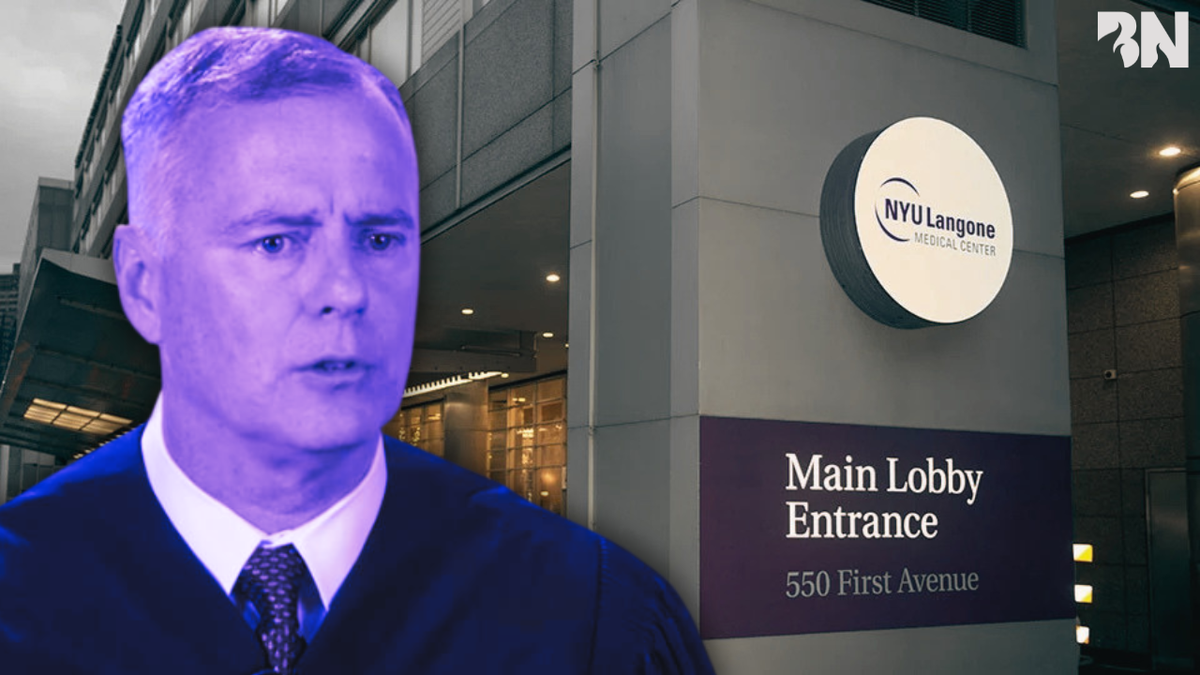
NYU Langone Health faced a 9 a.m. deadline this morning to answer a federal grand jury subpoena demanding identifying records for patients under eighteen who received gender-affirming care between January 1, 2020 and May 5, 2026, together with the names of every staffer involved. The subpoena was issued by the U.S. Attorney's Office for the Northern District of Texas and made returnable in Fort Worth.
It is the first publicly known federal grand jury subpoena to a hospital in the Justice Department's national probe of gender-affirming care for minors. NYU has disclosed it is one of several institutions subpoenaed.
The federal courts haven't stopped the campaign. Hospitals will have to.
Three weeks ago, the same U.S. Attorney's Office secured an enforcement order from U.S. District Judge Reed O'Connor requiring Rhode Island Hospital to produce records of its pediatric gender-affirming care patients to his court for safekeeping under seal. That case used an administrative subpoena, but the venue was the same: Fort Worth, in the Northern District of Texas.
Rhode Island Hospital and the state's Office of the Child Advocate then asked a Rhode Island federal court to quash the underlying subpoena. Judge Mary McElroy did so, finding that the Department had acted in bad faith and condemning what she called its “appalling” and “reckless disregard for the duty of candor.” O'Connor responded by ordering the hospital to produce the records to his court anyway, and by ordering it not to seek relief in any court but his, the Fifth Circuit, or the Supreme Court. Slate's Mark Joseph Stern wrote that the order “verges on impeachable misconduct.”
Katelyn Burns depends on the support of her readers. Consider becoming a paid subscriber for as little as $4/mo or $40/yr
The First Circuit declined to block the records production on an emergency basis. The records began flowing the next morning. They were anonymized, held under seal, and not yet released to prosecutors while appeals continue.
The Fifth Circuit denied Rhode Island Hospital's stay. The First Circuit denied the Child Advocate's emergency injunction. The merits appeals remain unresolved, but the records are already in Fort Worth.
Both cases sit inside a longer campaign. Last summer, the Department of Justice sent administrative subpoenas to more than twenty providers of pediatric gender-affirming care. Numerous federal judges quashed them, several writing that the Department was using its subpoena power not to investigate fraud but to harass providers and pressure them into shutting down their clinics. The Department's response was twofold. It announced that its nationwide investigation would now be run out of Northern Texas. And it has now escalated from administrative process to grand-jury subpoenas — the kind that hit NYU Langone in early May, with several other institutions reportedly subpoenaed as well.
The DOJ playbook does not stop with subpoenas. On May 15, the Department announced that Texas Children's Hospital had agreed to pay a $10 million penalty and permanently stop providing gender-affirming care to minors. On June 5, the Department announced a similar resolution with the Cleveland Clinic: a $308,000 settlement of billing allegations, a decades-long commitment not to provide such care, and $2 million dedicated to “detransition” services. Some hospitals will be subpoenaed. Others will settle. There is no reason to assume the campaign will stay limited to gender-affirming care.
The judge at the center of the subpoena cases is Reed O'Connor. Who he is matters, because the Department certainly knew. He is a George W. Bush appointee who, before taking the bench, served as a federal prosecutor and as Senate Judiciary Committee counsel, including chief-counsel work with Senator John Cornyn. He is the judge who, in 2018, declared the entire Affordable Care Act unconstitutional in a ruling the Supreme Court reversed seven-to-two on standing grounds.
He is the judge who held the Indian Child Welfare Act unconstitutional. The Supreme Court reversed his ghost-gun ruling seven-to-two last year and his preventive-care ruling six-to-three last summer. He blocked federal Title IX guidance protecting LGBTQ students. While presiding over Elon Musk's lawsuit against Media Matters, he refused to recuse despite owning Tesla stock. He has been described as “more powerful than the president.”
O'Connor has openly defended judge-shopping. At the Federalist Society's 2024 Texas conference, he called the Judicial Conference's policy promoting random case assignment the result of “external political criticism.” The Northern District of Texas then declined to adopt the policy. And the Department of Justice now files there.
Learn more abour Judge Reed O'Connor in Katelyn's YouTube
The same playbook — venue-shopped subpoena, friendly judge, sealing order, appellate punt, settlement pressure — can be aimed at abortion providers, immigration-status data, vaccine records, or any clinical information a politically motivated investigation wants. Whether your hospital, or your medical school's hospital, or the regional health system you trust gets caught reacting depends on whether the right questions reach the board before the subpoena does. Those questions can come from anyone with standing to ask: donors, patients, medical staff, alumni, trustees.
Hospital trustees, medical-society boards, and hospital general counsels can act before that subpoena lands. They can require data minimization at the point of clinical entry — collecting only what care requires and only as long as care requires it. They can adopt anonymization protocols that match what Brown University Health conceded only after the records had already been compelled. They can pre-position arguments based on state shield laws — statutes that protect providers from out-of-state legal pressure — so that the response to a Fort Worth subpoena is not improvised at 6 p.m. on a Friday. They can coordinate across institutions so that the next hospital does not stand alone.
None of this depends on Reed O'Connor changing. He won't. The Department of Justice won't stop venue-shopping. Emergency appellate relief has failed, and the merits appeals may not arrive in time. The lever is institutional readiness.
Texas Children's settled in May. Cleveland Clinic settled last week. Rhode Island Hospital is complying under court order. NYU Langone faced its deadline this morning. Each of those boards reacted under pressure, with little time to prepare. Yours doesn't have to.
Chad M. Topaz is a professor of complex systems at Williams College, cofounder of the nonprofit QSIDE Institute, and author of Unlocking Justice: The Power of Data to Confront Inequity and Create Change (Princeton University Press). Reach him on Bluesky at @chadtopaz.bsky.social.